Standing in the Sistine Chapel can feel overwhelming. You know you are looking at one of the most famous interiors in the world, but between the crowded room, the security reminders, and the sheer amount of painting around you, it is easy to miss the real Sistine Chapel highlights. If you want a focused viewing plan for the ceiling and Michelangelo’s Last Judgment, this guide will help you know exactly what to look for and why it matters.
You will learn how to read the ceiling in a simple way, which scenes deserve your attention first, how the altar wall changes the mood of the chapel, and which details can make your visit more rewarding even if you only have a few minutes.
Key Takeaways
- The best way to approach the Sistine Chapel is to focus on a few major scenes rather than trying to see everything at once.
- On the ceiling, the central Genesis scenes are the clearest starting point, especially The Creation of Adam.
- The surrounding figures, including prophets, sibyls, and ignudi, add meaning and energy to the ceiling’s overall design.
- The Last Judgment on the altar wall has a very different tone from the ceiling, with more movement, tension, and spiritual drama.
- A simple viewing plan helps you notice composition, gesture, and emotional contrast instead of just famous names.
How to approach the Sistine Chapel without feeling lost
Start with a simple viewing plan
The chapel rewards focus. Instead of trying to identify every figure, divide your attention into two main areas: the ceiling above and The Last Judgment on the altar wall. That alone gives your visit structure.
On the ceiling, begin with the central narrative scenes from Genesis. Then look outward to the larger seated figures and the smaller corner and side elements. After that, turn to the altar wall and let your eyes adjust to the very different rhythm of The Last Judgment.
Quick Tip: If the room feels crowded or rushed, pick three ceiling scenes and three details in The Last Judgment. A short, intentional viewing plan is often better than a scattered one.
Know that the ceiling and altar wall were painted at different moments
One reason the chapel can feel visually complex is that the ceiling and the altar wall do not tell the same kind of story in the same mood. The ceiling presents a grand biblical sequence with clarity and architectural order. The Last Judgment, painted later, is more turbulent and emotionally charged.
This contrast is part of the experience. You are not just looking at decoration; you are seeing two major phases of Michelangelo’s vision in one room. For useful background, the Sistine Chapel ceiling overview and the overview of Michelangelo’s Last Judgment can help you place the works before or after your visit.
What to look for on the Sistine Chapel ceiling
The central Genesis scenes
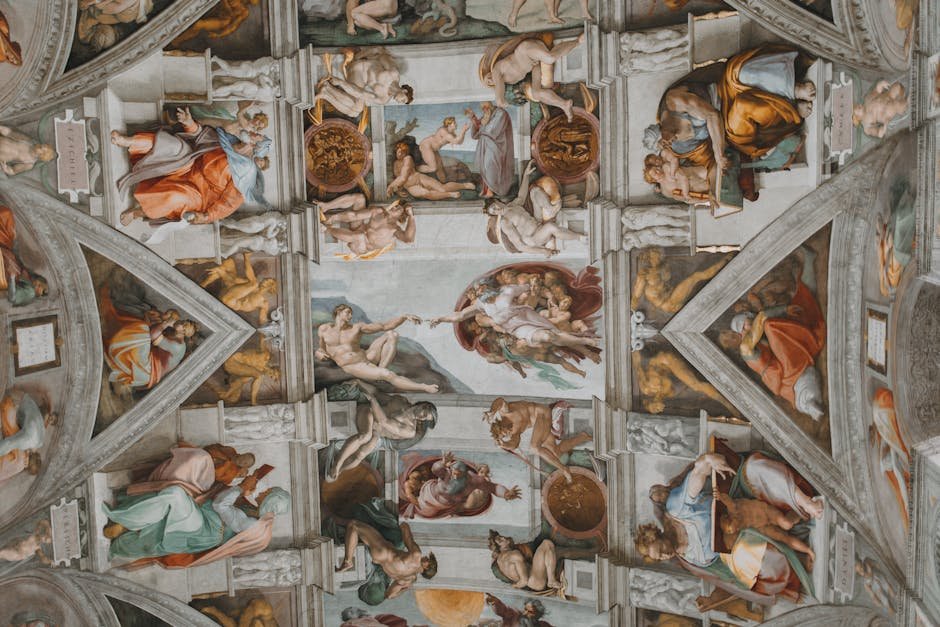
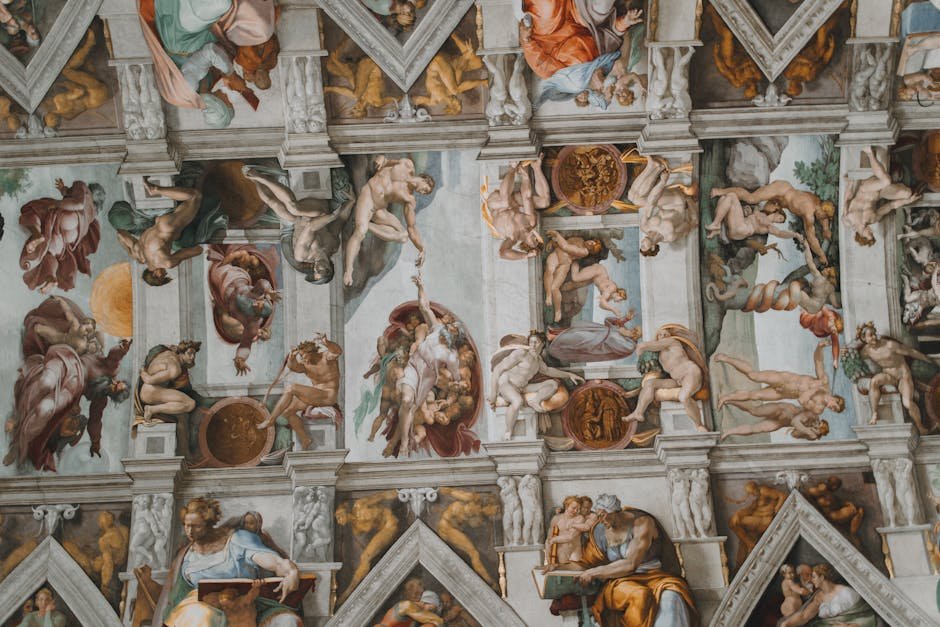
The most important place to start is the row of central ceiling panels. These scenes from Genesis are the backbone of the program and the easiest part to follow from a distance. They include episodes such as the separation of light from darkness, the creation of the sun and moon, the creation of Adam, the creation of Eve, the fall and expulsion, and the story of Noah.
If time is short, give special attention to The Creation of Adam. It is famous for good reason: the nearly touching hands create a moment of suspended energy that is instantly readable, even in a crowded room. Notice how little is needed to communicate so much.
Why The Creation of Adam stands out
This fresco is often the first image visitors recognize, but it becomes more interesting when you slow down. Adam’s body looks powerful yet passive, while God and the surrounding figures surge forward with force. The gap between the fingers does much of the emotional work.
Try to notice the balance between calm and motion. Adam reclines on the earth, while God arrives in a burst of drapery and bodies. That contrast gives the scene its unforgettable tension.
The prophets and sibyls around the central scenes
Once you have looked at the central panels, shift outward to the monumental seated figures. These are prophets from the Hebrew Bible and sibyls from classical tradition. They are not mere decoration; they frame the main story and expand the chapel’s sense of expectation, prophecy, and revelation.
Even if you do not identify each one, notice their variety. Some are absorbed in reading, some twist dramatically, and some seem caught in thought or action. They bring psychological depth to the ceiling and make the architecture feel alive.
The ignudi and the energy of the whole design
One of the most striking features of the ceiling is the presence of the ignudi, the athletic nude youths placed around the central scenes. Many first-time visitors are unsure what to do with them, but they are worth attention because they help create the ceiling’s visual rhythm.
They act almost like living sculpture within the painted framework. Their bodies turn, stretch, and anchor the composition, showing Michelangelo’s extraordinary command of anatomy and movement. Even if their exact meaning is debated, their visual impact is immediate.
How to read the ceiling as a complete work
Look for structure before detail
The ceiling can seem crowded if you search for details too early. A better method is to read the larger structure first. See the central story panels, then the seated figures, then the surrounding architectural illusion that organizes everything.
This approach helps you understand why the ceiling feels coherent despite its complexity. Michelangelo did not simply fill space with images; he built a visual system that guides your eye across the vault.
Notice the sculptural quality of the figures
Michelangelo thought like a sculptor, and that sensibility is visible everywhere on the ceiling. Bodies have weight, torsion, and muscular clarity. Figures seem carved out of light and shadow rather than merely painted onto plaster.
This is especially helpful if you are not confident reading iconography. You can still respond to the physical drama of the forms: how a shoulder turns, how a torso twists, or how a seated figure occupies space with monumental force.
| Area to view | What to notice |
|---|---|
| Central Genesis panels | Main narrative scenes and the clearest storytelling |
| Prophets and sibyls | Monumental seated figures with distinct moods and poses |
| Ignudi | Dynamic nude youths adding energy and structure |
| Architectural framework | The painted design that organizes the whole ceiling |
What to look for in The Last Judgment
Start with the overall movement
When you turn to The Last Judgment, the first thing to notice is how different it feels from the ceiling. The ordered compartments are gone. Instead, the wall is filled with swirling bodies and dramatic motion centered around Christ.
Do not try to identify every saint or every action at once. First, take in the overall structure: the blessed rising, the damned falling, and the central force of judgment that pulls the entire composition together. For a helpful visual explanation, Khan Academy’s video on the Last Judgment in the Sistine Chapel is a useful companion.
Focus on Christ and Mary at the center
The center of the fresco is the key to reading the wall. Christ is not presented in a soft, gentle mode; he appears powerful, commanding, and active in judgment. Beside him, Mary seems to draw inward, adding to the sense that this is a moment of immense consequence.
This central grouping sets the emotional tone for everything around it. The figures are not calmly arranged in tiers. They respond to a decisive spiritual event unfolding in real time.
Look at the contrast between ascent and سقوط
One of the most useful ways to understand the fresco is to compare the zones of rising and falling. On one side and in the upper areas, figures strain upward toward salvation. In the lower areas, others are dragged downward in fear and resistance.
Even without knowing every theological reference, you can feel the moral drama through movement alone. Bodies pull, twist, cling, and recoil. The wall becomes a theater of destiny rather than a static diagram.
Notice the emotional difference from the ceiling
If the ceiling often feels balanced and majestic, The Last Judgment feels urgent and unsettled. That difference is one of the most important Sistine Chapel highlights to notice. It shows how Michelangelo could shift from ordered narrative to overwhelming spiritual intensity.
This is also why many visitors find the altar wall unexpectedly powerful. It may not have the instant recognizability of The Creation of Adam, but it often leaves a deeper emotional impression.
Ceiling vs. Last Judgment: the key differences to notice
A quick comparison
If you want to remember the chapel clearly after your visit, compare the two major works directly. This gives you a simple mental framework and helps you avoid blending everything together.
| Feature | Ceiling | The Last Judgment |
|---|---|---|
| Main mood | Ordered, monumental, narrative | Dramatic, turbulent, emotionally intense |
| Structure | Segmented scenes within a framework | One vast unified composition |
| Main focus | Genesis and prophecy | Final judgment of humanity |
| Best first step | Follow the central panels | Take in the whole wall, then the center |
Which one should you prioritize if time is short?
If you only have a few minutes, start with the ceiling’s central scenes and then give focused attention to The Last Judgment. This gives you both the iconic image most visitors expect and the emotional climax of the chapel.
A practical shortlist would be: The Creation of Adam, one or two other Genesis scenes, a prophet or sibyl, the central Christ in The Last Judgment, and the contrast between the saved and the damned below.
A practical viewing checklist for art lovers
What to remember while you are in the room
- Begin with the central ceiling panels before chasing smaller details.
- Spend a moment on the nearly touching hands in The Creation of Adam.
- Look outward to the prophets, sibyls, and ignudi to understand the full design.
- Face the altar wall and first read The Last Judgment as one giant movement.
- Then focus on Christ at the center and the contrast between rising and falling figures.
Quick Tip: If neck strain becomes a problem, pause and alternate between looking up at the ceiling and straight ahead at the altar wall. Short, concentrated looks are usually more effective than one long stare.
How to make the visit more meaningful
You do not need to memorize names or symbols to appreciate the chapel. A better goal is to notice how Michelangelo tells stories through bodies, gesture, and composition. Ask yourself where the eye is pulled, where the tension lies, and how the mood changes from one area to another.
That simple method turns the visit from a checklist into a real act of looking. For many art lovers, that is the difference between seeing a famous place and actually experiencing it.
Frequently Asked Questions
What is the most important scene on the Sistine Chapel ceiling?
For most visitors, The Creation of Adam is the key scene because it is visually clear, emotionally powerful, and central to understanding Michelangelo’s ceiling. If you have limited time, it is the best single image to prioritize.
What should I look for in The Last Judgment?
Start with the overall swirl of bodies, then focus on Christ and Mary at the center. After that, notice the contrast between the saved rising upward and the damned falling downward.
How is The Last Judgment different from the ceiling?
The ceiling is more structured and narrative, with separate scenes from Genesis framed by other figures. The Last Judgment is one large, unified composition with a more intense and dramatic emotional effect.
Can I enjoy the Sistine Chapel without knowing art history?
Yes. A focused plan helps more than specialist knowledge. If you pay attention to movement, gesture, mood, and the contrast between the ceiling and the altar wall, you can have a rich and memorable experience without knowing every figure by name.