If you want to learn how to appreciate classical paintings but tend to feel lost in museums, put off by labels, or unsure what deserves your attention, start simpler. You do not need specialist vocabulary to enjoy older art. You need a way of looking that slows you down, helps you notice what matters, and adds context only after you have had your own first response.
Classical paintings can feel distant because many were made for churches, courts, and wealthy patrons who already knew the stories, symbols, and social codes. Once you learn how to spot subject, composition, light, and a few meaningful details, they become far easier to read.
Key Takeaways
- Look at the painting before you read the label; your first visual reaction is useful evidence, not a mistake.
- You do not need to decode everything. Subject, mood, light, and visual focus already tell you a great deal.
- Classical paintings were often made to teach, persuade, honor, or glorify, so context matters.
- Simple period clues can help you tell Renaissance, Baroque, and Neoclassical works apart more quickly.
- Your eye improves fastest through comparison, short notes, and repeat viewing rather than memorizing jargon.
What ‘classical painting’ usually means
In everyday use, classical painting usually refers to older European traditions such as Renaissance, Baroque, Rococo, and Neoclassical art, along with related old master painting. It is not one single style. A Renaissance altarpiece, a Dutch portrait, and a Neoclassical history painting can look very different.
What links them is a shared emphasis on control: drawing, proportion, storytelling, hierarchy, and technical finish. Unlike much modern and contemporary art, these works often ask you to notice how bodies, fabric, space, gesture, and light have been arranged to guide your attention and shape meaning.
Why classical paintings feel hard at first
Beginners often assume there is a hidden correct answer and that the museum label contains it. That makes the whole experience feel like a test. Labels and art-historical terms can help, but only after you have something visual to attach them to. If you read first, you may end up borrowing the museum’s interpretation instead of building your own. If you look first, the label becomes clarification rather than permission.
How to appreciate classical paintings with a simple method
- Look before you read. Give the painting 20 to 30 seconds of quiet attention. Ask yourself whether it feels calm or theatrical, bright or shadowy, intimate or grand.
- Name the scene. Is it a portrait, religious image, myth, historical episode, still life, or domestic interior? Even a rough answer keeps you grounded in what is actually there.
- Follow the design. Notice where your eye lands first, where it moves next, and what controls that movement. Light, diagonals, red cloth, pointing hands, and faces turned toward one figure are common ways painters direct attention.
- Test the important details. Look for objects or gestures that seem too deliberate to be random: a book, sword, flower, skull, raised hand, or unusually rich clothing. A focused exercise like the one in this art appreciation guide from Classical Studies Support is useful because it forces you to describe one feature and its effect instead of speaking vaguely.
- Add context last. Only now read the label, date, artist, original setting, and patron if listed. You are looking for context to deepen your reading, not replace it. If you want another structured prompt, this four-step appreciation article from The Classical Classroom works well as a follow-up.
What details usually carry meaning
In classical painting, symbols are often practical storytelling tools rather than decorative extras. A skull may point to mortality, a lily to purity, armor to rank or heroism, and a book to learning or devotion. Hands matter too. A pointing hand, an open palm, or a withdrawn gesture often tells you where the emotional or moral emphasis lies.
Commission also shapes meaning. Many of these works were made for a purpose. A royal portrait may project authority more than personality. A religious image may favor clarity and devotion over ambiguity. A history painting may not simply record the past; it may try to tell viewers how that past should be remembered.
Period clues that help you read faster
| Period | What you notice first | Main aim | Usual effect |
|---|---|---|---|
| Renaissance | Balance, measured space, idealized figures | Harmony and proportion | Calm authority |
| Baroque | Strong contrast, movement, dramatic gesture | Emotional and theatrical impact | Immediate tension |
| Neoclassical | Clean outlines, restraint, firm structure | Moral seriousness and order | Admiration for discipline |
Use these as starting clues, not rigid rules. If a work feels stable and clear, Renaissance is a useful lens. If it feels staged, intense, and driven by light, think Baroque. If it looks controlled, severe, and purposeful, Neoclassical is often closer.
Where beginners should start
Choose paintings that give you one obvious point of entry: a face, a strong gesture, a clear light source, or a readable emotional situation.
- Renaissance portraits are a good first stop if you want one sitter and a stable composition. They are less useful if you need action, and their restraint can feel cool at first.
- Baroque religious scenes suit viewers who respond to drama and contrast. They are harder if the story is unfamiliar, and some people find the intensity excessive.
- Mythological paintings reward viewers who enjoy clues and stories. They are a weaker starting point if you want instant clarity because myths can blur together without context.
- History paintings work well if you care about politics or public memory. They can feel staged and rhetorical when you want something more personal.
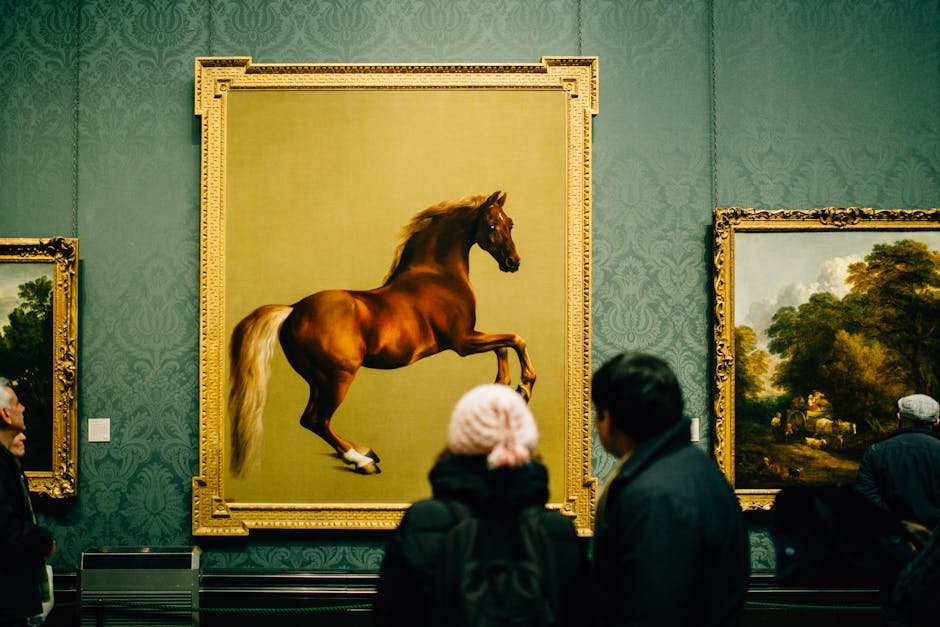
If you are choosing between museum visits and screens, each format teaches something different. In person, you get scale, texture, cracks, glazing, and the physical force of the image. Online, you can zoom into hands, jewelry, background objects, and brushwork far more easily. Museums can be interrupted by crowds, glass, and fatigue; digital images flatten texture and distort size. The most useful routine is often both: see the work in person when you can, then revisit it online.
For light guidance, use one short resource after your own first look, not before. A practical starting point is this beginner-friendly guide to appreciating art, along with museum collections that offer zoom tools and brief object notes.
Common mistakes that slow beginners down
- Judging too quickly: saying you do not like a painting can end the conversation before you have seen what it is trying to do.
- Reducing everything to realism: accurate anatomy matters, but so do symbolism, structure, and mood.
- Reading the label first: it becomes harder to develop your own eye when the explanation arrives before the looking.
- Assuming there is one perfect answer: strong interpretations are grounded in observation and context, but good paintings usually support more than one thoughtful reading.
Build your eye without overcomplicating it
- Compare two works from different periods and note changes in light, gesture, and emotional tone.
- Keep a short viewing journal: what grabbed you first, what changed on a second look, and one question that remained.
- Learn a small set of recurring themes and symbols instead of trying to memorize everything at once.
- Return to the same painting. The second viewing is often when composition and intention become visible.
Questions to ask in front of any painting
- What do I notice first, and how is the painting making that happen?
- What emotion or action seems to be unfolding?
- Which details feel deliberate rather than merely decorative?
- What would the original audience have understood more quickly than I do?
FAQ
Do I need art history before I can enjoy classical paintings?
No. Observation comes first. Art history makes your second look richer, but it does not need to come before your first one.
What is the easiest entry point for beginners?
Portraits and emotionally direct Baroque scenes usually work best because they offer a clear focal point and readable human feeling.
How long should I spend with one painting?
Two to five focused minutes is enough to notice subject, composition, mood, and one or two meaningful details.