Self-Guided Rome Walking Tours: 5 Phone-Friendly Routes for Exploring the City at Your Own Pace
Self-guided walking tour routes in Rome are ideal if you want structure without being tied to a group schedule. With a phone, an offline map, and one good audio guide, you can move between major sights, stop when a church or piazza pulls you in, and skip anything that does not fit your pace.
This guide compares five practical routes you can do on your own, from a first-day historic center walk to a slower Trastevere and Jewish Ghetto route. You will also see which walk suits your style, when to do it, and what to download before you leave Wi-Fi.
Key Takeaways
- Pick the route by mood as much as landmarks. Ancient Rome, the baroque center, and Trastevere all feel like different cities.
- Early starts improve the busiest walks. Routes through the historic center and Colosseum area are far more enjoyable before late-morning crowds build.
- Offline maps matter more than mobile data. Saved pins and downloaded maps make Rome’s smaller streets much less frustrating.
- Some routes are flexible, others depend on timing. Route 5 only shines near sunset, while Route 2 is best before the heat builds.
- Your phone should support the walk, not dominate it. Use it for directions and short context, then look up.
Why a phone-based Rome walk works
Rome is unusually good for self-guided walking because many major sights sit in compact clusters. A phone solves the main friction points: it keeps you oriented in confusing side streets, lets you save a clean stop order, and gives you just enough context at places like the Pantheon, Piazza Navona, or the Forum viewpoints.
If you want an app-led option, GPSmyCity’s Rome audio walks are useful for travelers who want turn-by-turn structure without joining a live tour. If you want constant commentary or deeper interpretation inside major sites, a guided tour is still the better choice.
How to choose self-guided walking tour routes in Rome
- Choose the version of Rome you want most. Route 1 is the classic postcard walk, Route 2 is history-first, Route 4 is more about neighborhood rhythm and meals.
- Be realistic about your pace. A route that looks short on the map can easily stretch into half a day once you add churches, coffee stops, and photo breaks.
- Think about crowds, shade, and timing. Ancient Rome feels harder in direct sun, while the sunset route only works if you reach the final viewpoint at the right moment.
At a glance: 5 Rome routes compared
| Route | Best for | Why choose it | Watch for |
|---|---|---|---|
| Historic center: Piazza del Popolo to the Pantheon | First-time visitors | Classic landmarks in a logical order | Heavy midday crowds |
| Ancient Rome: Colosseum to Capitoline Hill | History-focused travelers | Strongest ruins and viewpoints | Heat, exposure, uneven ground |
| Campo de’ Fiori to the Spanish Steps | Architecture and piazzas | Great mix of churches, fountains, and squares | Church hours shape the route |
| Trastevere and the Jewish Ghetto | Repeat visitors and food-focused walkers | More atmosphere and a slower pace | Less efficient for headline sights |
| Castel Sant’Angelo to Pincian Terrace | Sunset walkers | Views, river light, easy evening fit | Only works well at the right time |
Route 1: Historic center from Piazza del Popolo to the Pantheon
Best for: first-time visitors and short stays. Stops: Piazza del Popolo, Spanish Steps, Trevi Fountain, Piazza Colonna, Pantheon, with Piazza Navona as an easy final extension.
This is the most useful first-day walk because the landmarks connect naturally and help you understand central Rome fast. Its drawback is crowd density, especially near Trevi and the Pantheon. Walking time is under two hours, but most travelers turn it into three or four with coffee, church visits, and detours. Start early, or shift it toward early evening. For another way to picture how these central sights connect, Rome Toolkit’s self-guided Rome walk ideas are helpful.
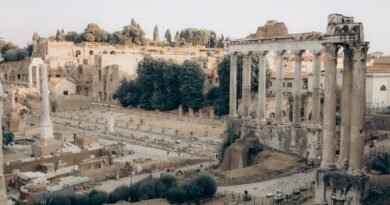
Route 2: Ancient Rome from the Colosseum to Capitoline Hill
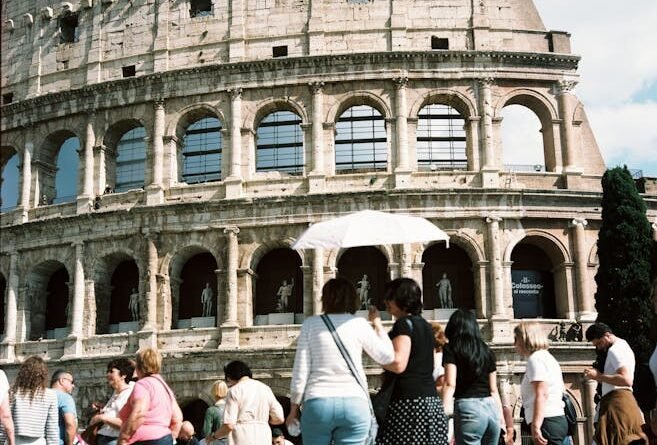
Best for: travelers who came to Rome for ruins and imperial history. Stops: Colosseum exterior, Arch of Constantine, Roman Forum viewpoints, Via dei Fori Imperiali, Trajan’s Column, Capitoline Hill.
This route has the strongest historical atmosphere, but it is also the least forgiving. There is less shade, more exposed stone, and the walk loses impact if you arrive with no context, so use your phone in short bursts before each major stop rather than listening nonstop. If you want paid entries, book timed tickets first and build the route around them. This self-guided Rome route overview from Devour is useful if you want to combine the area with classic-center sights.
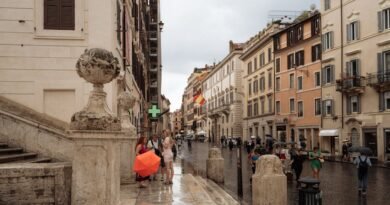
Route 3: Campo de’ Fiori to the Spanish Steps
Best for: travelers who want piazzas, fountains, church interiors, and architecture without a museum-heavy day. Stops: Campo de’ Fiori, Piazza Farnese, Piazza Navona, Pantheon, San Luigi dei Francesi, Trevi Fountain, Spanish Steps.
This is central Rome at its most theatrical, with big public spaces and strong visual variety. The limitation is timing: some of the best stops depend on church opening hours, and the busiest squares feel much better before the peak rush or later in the afternoon. It works well as a half-day walk with a long lunch or gelato stop away from the most crowded corners.
Route 4: Trastevere and the Jewish Ghetto
Best for: repeat visitors, slower walkers, and travelers who care about atmosphere as much as landmarks. Stops: Tiber Island, Jewish Ghetto, Portico d’Ottavia, Teatro di Marcello, Trastevere lanes, Santa Maria in Trastevere.
This route trades big-name efficiency for neighborhood texture. If you only have a first half-day in Rome, it may feel too indirect; if you enjoy lunch, aperitivo, and wandering, it is one of the most rewarding walks here. Save anchor pins before you start, especially bridges and major churches, because the smaller streets are easy to drift through without noticing.
Route 5: Sunset from Castel Sant’Angelo to the Pincian Terrace
Best for: arrival night, final evening, couples, and anyone who wants a shorter scenic walk. Stops: Castel Sant’Angelo, Ponte Sant’Angelo, a crossing toward Via del Corso, Piazza del Popolo, Pincian Terrace, with Villa Borghese as an optional extension.
This is the easiest route to slot into a busy itinerary, and it looks best when the light is doing the work for you. Timing is the real trade-off: start about 60 to 90 minutes before sunset or the finish feels rushed. The route is otherwise manageable, though the last climb is not ideal if your legs are already done for the day.
What to download before you start
- Offline maps and numbered pins. Save each stop in order so you can skip ahead without getting confused.
- One audio source per route. Too much app-switching makes the walk feel mechanical.
- A charged phone and small power bank. Maps, photos, and audio drain a battery faster than most travelers expect.
- Simple walking essentials. Broken-in shoes, water, and light shoulder coverage make these routes easier and more flexible.
Common mistakes to avoid
- Starting too late. Routes 1 and 2 are much better before crowds and harsher light take over.
- Relying on live data. Download maps and audio first; treat mobile data as a backup.
- Underestimating cobblestones and heat. Rome is flatter than many cities, but it can still wear you down.
- Ignoring opening times. Route 2 works best with Colosseum or Forum tickets planned ahead, and Route 3 needs a quick check of church hours.
- Checking your phone too often. Use it to reset your direction, then put it away and actually see the city.
How to turn these walks into a short Rome plan
Two days: Use Route 1 on your first morning to learn the center, then add Route 5 in the evening if you still have energy. Make Route 2 the focus of Day 2, especially if you have timed entries.
Three days: Pair Route 1 with Route 2, then choose Route 3 if you still want classic central sights or Route 4 if you want a slower neighborhood day. That mix gives you variety without repeating the same version of Rome.
FAQ
Can I do these walks without mobile data?
Yes. Download offline maps, save your stops, and preload any audio before you leave Wi-Fi.
Which route is best if I only have one day?
Route 1 is the safest choice for a first visit because it covers classic sights efficiently. Choose Route 2 instead if ancient history is your main priority.
Which routes are easiest for families or older travelers?
Route 1 and Route 3 are the easiest starting points because they are flatter and easier to shorten. Route 5 is also manageable if the final climb feels reasonable. Route 2 is the least forgiving.
Is a phone audio guide enough for Rome?
Usually yes for streets, piazzas, and viewpoints. For archaeological interiors or travelers who want deeper storytelling throughout, a live guide still adds value.