If you are wondering how to start reading Dante without turning the experience into homework, start smaller than you think. You do not need a course in medieval theology, Florentine politics, or classical myth before opening The Divine Comedy. You need a good entry point, a readable edition, and a pace you can keep.
For most beginners, the best approach is straightforward: start with Inferno, use a modern translation with helpful notes, and read one canto at a time. Dante becomes far less intimidating once you stop trying to understand everything at once.
Key Takeaways
- Most new readers should begin with Inferno, not because it is the whole of Dante, but because it is the easiest part to visualize and follow.
- A modern, annotated translation is usually a better first choice than an older or more ornate version.
- Reading one to three cantos per sitting keeps the poem clear and prevents fatigue.
- Use summaries, notes, and audio selectively; they should support the reading experience, not replace it.
- Your first goal is orientation: follow the journey, the imagery, and the emotional movement before chasing every allusion.
Why Dante feels difficult at first
Dante writes as if poetry can hold everything at once: story, theology, politics, philosophy, autobiography, and myth. That density is why first-time readers often struggle, especially when the translation is stiff or the edition offers too little guidance.
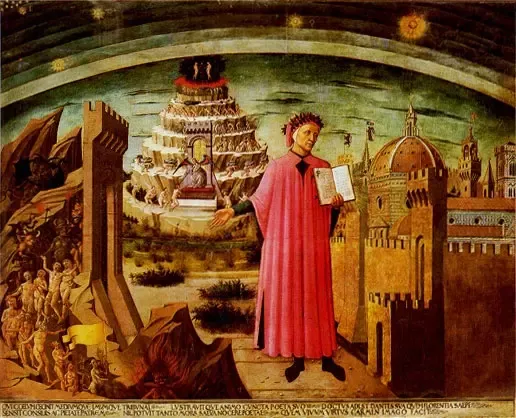
It helps to remember that the poem is still a journey with a clear shape. A lost man moves through Hell, climbs Purgatory, and rises toward Heaven. Dante the author is also not quite the same as Dante the pilgrim inside the poem; the speaker has to learn how to fear, pity, judge, and understand. You can follow that growth even when some references remain hazy.
How to start reading Dante: begin with the right part
If you want the easiest entrance, start with Inferno. If what interests you most is moral growth rather than punishment, you may eventually prefer Purgatorio. Paradiso usually works best after the first two, since it is the least concrete and asks the most patience from new readers.
| Part | Best for | Main strength | Limitation | Not ideal for |
|---|---|---|---|---|
| Inferno | First-time readers who want a strong hook | Concrete scenes and immediate drama | Can make Dante seem more interested in spectacle than he is | Readers who already know the famous episodes and want the full arc |
| Purgatorio | Readers drawn to reflection and change | Humane, hopeful, and psychologically rich | Slower pace and less instant drama | Readers who need constant intensity |
| Paradiso | Readers willing to move slowly and think hard | Dante’s most ambitious ideas | Hardest section to grasp on a first pass | Readers who rely on plot and image to stay grounded |
Most beginners should still start with Inferno. Read the whole poem in order only if you already want a long, patient project and are comfortable using notes along the way.
Which translation and edition should beginners choose?
With Dante, the edition matters almost as much as the translation. A good beginner edition gives you short introductions, brief canto summaries, and notes that explain who someone is and why the scene matters. Too few notes leave you lost; too many can break the poem into homework-sized fragments.
Prose is easiest if your only goal is clarity, but many first-time readers do better with a modern verse translation that still sounds alive on the page. Older-sounding English may feel grand, yet it often creates unnecessary distance.
| Translation | Best for | Main strength | Limitation | Best use |
|---|---|---|---|---|
| Robert and Jean Hollander | Readers who want guidance | Excellent notes and orientation | The commentary can slow momentum | Slow, serious first read |
| Allen Mandelbaum | Readers who want readable verse | Balanced and steady | Lighter help if you need heavy annotation | General first read of Inferno |
| John Ciardi | Readers who want energy | Lively reading voice | Some diction feels older, and some readers want a closer rendering | Fast-moving read with strong momentum |
| Mark Musa | Readers anxious about poetic density | Accessible and classroom-friendly | Less musical for readers who want richer poetic texture | Sampling key cantos or a first low-pressure read |
- Look for: modern English, clear notes, and a clean layout.
- Avoid first: bare public-domain texts, archaic diction, or beautiful editions with almost no guidance.
- Best rule: choose the version you are most likely to finish, not the one that merely looks authoritative.
How to read Dante without getting overwhelmed
- Read one to three cantos at a time. A canto usually works as a complete unit, so small sessions keep the structure visible.
- Use a short summary before each canto. It reduces confusion and lets you pay attention to the language.
- Check notes selectively. Pause when a reference is central; keep moving when the emotional point is already clear.
- Read aloud or listen. Dante often becomes easier when you can hear the movement of the lines.
If you want extra support, this American Scholar essay on reading Dante in the 21st century, this introductory lecture on how to read Dante's Divine Comedy, and this guide to reading Dante's Divine Comedy can help you get oriented. They work best as companions, not substitutes for the poem.
A simple first reading plan
Two-week sampler: If you are not ready to commit, read a handful of strong Inferno cantos rather than the whole book straight through. Good starting points are I, III, V, X, XIII, XXVI, XXXIII, and XXXIV. You lose some buildup, but you get a real sense of Dante’s range.
Careful first read of Inferno: Read one canto a day, five days a week, with one review day and one day off. This pace suits readers who want depth without burnout, though it does require consistency.
Whole Divine Comedy: Aim for four or five cantos a week. If you are reading other books too, even two cantos a week is enough. The key is regular contact; long gaps make Dante feel unfamiliar again.
Common mistakes new readers make
- Starting with a translation that is too dense or archaic: if the language feels stiff from line one, you are fighting the edition as much as the poem.
- Treating every canto like a puzzle to solve completely: a first read should aim for orientation, not mastery.
- Ignoring notes or living in them: both extremes flatten the experience.
- Quitting after the opening cantos: Dante usually gets easier once your ear adjusts.
If you are curious but not ready for the full poem
Sampling selected cantos is a legitimate way to begin, especially if you want to see whether Dante’s voice works for you before buying a heavier study edition. The trade-off is simple: reading out of sequence gives less of the poem’s cumulative shape.
If even that feels like too much, start with a retelling, a short guide, or a lecture and then move into the text. Some readers also try La Vita Nuova first for a shorter taste of Dante’s voice, though it is not necessary.
After your first Dante read
If you loved the structure of moral growth, continue into Purgatorio. If the poem’s largest questions pulled you in, Paradiso may reward you more than you expect. If you only enjoyed the punishments and disliked almost everything else, stopping after Inferno is reasonable. Once you finish a first read, secondary material becomes much more useful, and related authors such as Virgil, Augustine, Chaucer, or Milton can deepen the experience.
FAQ
Should I start with Inferno or the whole Divine Comedy?
Most beginners should start with Inferno. Begin with the full poem only if you want a long, slow reading project.
Do I need to understand medieval theology before reading Dante?
No. A basic sense of sin, repentance, and salvation helps, but a good edition can supply the rest.
What is the best translation for someone new to classics?
A modern translation with clear notes is usually the safest first choice.
How long does it take to read Dante for the first time?
You can sample Inferno in two weeks, read it carefully in about a month, or spend several months on the full Divine Comedy.