François de La Rochefoucauld (1613–1680) is best known for the Maxims, brief observations that question the motives behind apparently admirable behaviour. Gratitude, friendship, generosity and courage all come under scrutiny. His attraction is easy to feel in a single sentence; understanding the range and limitations of his writing takes longer. A good first reading allows room for both recognition and disagreement.
A courtier before he became a moralist
La Rochefoucauld was a French aristocrat whose experience included military service, court politics and the Fronde, the conflicts that challenged royal authority during the minority of Louis XIV. The concise biography accompanying Penguin’s edition places his writing against that political background. His was not the career of a philosopher working apart from the competition for influence.
His Memoirs recount that public world; the Maxims turn towards more general observations about conduct. The introduction to the Willis Bund and Friswell translation also describes the circles of Madame de Sablé and Madame de La Fayette. Conversation, literary exchange and the testing of short formulations mattered to the setting in which his later work developed.
The connection between experience and writing is worth keeping in view without turning it into a complete explanation. Knowing that an author participated in political intrigue does not prove that every remark about friendship is a disguised complaint about one former ally. The maxims address recurring patterns, and their claims can be examined beyond the circumstances of their author.
What kind of book are the Maxims?
The full French title, Réflexions ou sentences et maximes morales, announces reflections and moral observations. “Moral” here concerns human behaviour and motivation; it does not mean that every entry offers advice to behave well. The book repeatedly asks what might lie behind our own flattering accounts of ourselves.
The familiar Paris edition bears the date 1665, and La Rochefoucauld continued revising the work. The 1871 translation explains that its principal text follows the last edition corrected during his lifetime, published in 1678, while supplements preserve material excluded from that text or transmitted elsewhere. Consequently, a maxim’s number should be checked against a particular edition. A quotation and a bare number are not always enough to identify the same passage across different collections.
His recurring subject is amour-propre, usually rendered as self-love. This is more searching than a simple complaint about vanity. A person may benefit from an apparently generous action without admitting that benefit as a motive; someone may cherish a reputation for humility. The interest lies in the gap between an outward action and the explanation attached to it.
A famous reader who argued back
The English essayist William Hazlitt offered a forceful objection in “On Rochefoucault’s Maxims,” published in The Examiner on 23 October 1814. Hazlitt thought the French writer detected an element of self-interest within mixed motives, then treated that element as though it explained the whole action. Finding some vanity in generosity does not, on this argument, demonstrate that generosity is entirely false.
Hazlitt also asked why the same procedure could not be reversed: if good conduct contains something suspect, bad conduct may contain some better impulse. His essay is a useful companion because it disputes the method without requiring readers to deny every uncomfortable insight. The disagreement is specific and testable, rather than a choice between admiring La Rochefoucauld as infallible and dismissing him as merely cynical.
How to read without turning observations into laws
Begin with a small group of maxims. For each one, ask what sort of situation it describes and whether its wording leaves room for exceptions. Then try to imagine an example that supports it and one that resists it. That exercise preserves the sharpness of the sentence while preventing its polished form from doing all the arguing.
It also helps to read neighbouring entries. A collection is more than a supply of captions: themes recur, emphases shift and one formulation may complicate another. Keep a note of the translator when copying a passage. Small differences in the English words for pride, interest or self-love can affect how sweeping a claim seems.
For readers interested in other forms of moral observation, Mark Twain’s satire offers longer comic encounters with respectable appearances. The short prose of Ennio Flaiano offers a later mixture of aphorisms, dialogues and social observation. These are useful changes of scale and setting after the concentrated sentences of the Maxims.
Choosing an English edition
Leonard Tancock’s Maxims in Penguin Classics is an established modern English option. The freely available Willis Bund and Friswell version makes it easy to begin immediately and includes supplementary reflections, but its Victorian phrasing should not be mistaken for the only possible English voice of the author.
Look for an edition that explains its French base text, identifies its translator and distinguishes additional material from the main sequence. An introduction and notes are especially helpful for political references and variant numbering. Most of all, choose a version you can reread: these short observations become more interesting when the reader returns with a counterexample.
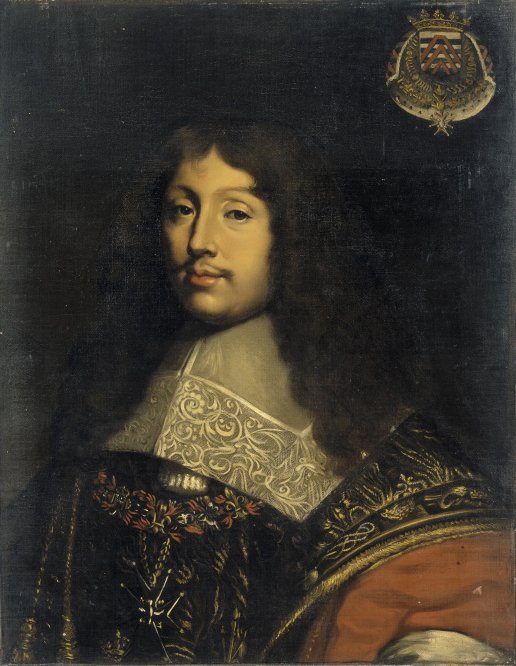
Image credit: Théodore Chassériau (1819–1856), portrait of François VI de La Rochefoucauld, 1836, via Wikimedia Commons. Painting and faithful two-dimensional reproduction are public domain; Public Domain Mark. Displayed proportionally; no crop or colour alteration.