Colosseum Entry Rules Explained: ID Checks, Security Screening, and What You Can Bring
Worried about being turned away at the gate, delayed by security, or bringing the wrong bag? If you are planning a visit and want the Colosseum entry rules explained clearly, this guide will help you avoid the most common mistakes. You will learn what kind of ID to bring, how security checks usually work, what items are generally allowed, and how to prepare for a smoother, less stressful entry.
For many visitors, the biggest problems happen before the visit even starts: a name mismatch on the ticket, a bag that is too large, or uncertainty about what security staff may ask to inspect. A little preparation makes a big difference, especially when you have a timed entry and do not want to lose valuable sightseeing time.
Key Takeaways
- Bring a valid photo ID that matches the name on your ticket, especially for named or discounted tickets.
- Expect airport-style security screening, including bag checks and inspection of personal items.
- Small bags are usually the safest choice; large backpacks, suitcases, and bulky luggage can cause entry problems.
- Do not bring sharp objects, glass containers, or anything that could be considered dangerous.
- Arrive early, keep your ticket and ID easy to access, and pack light to move through the entrance faster.
Why visitors get stopped at the Colosseum entrance
Most entry issues are not dramatic. They are usually simple problems such as missing identification, oversized bags, or bringing prohibited items without realizing it. Because entry is often timed, even a short delay can feel stressful.
The Colosseum is a major historic site with controlled access and security procedures. Staff need to verify tickets, manage crowds, and maintain safety inside the monument. That means visitors should expect checks rather than assume entry works like walking into a public square.
If you understand the basic rules before you arrive, you are much more likely to have a smooth experience. Think of entry as a short screening process rather than a casual walk-in.
ID checks: what to bring and why it matters
Does the Colosseum check ID?
Yes, visitors may be asked to show identification that matches the name on the ticket. This is especially important for tickets issued in a specific name and for reduced or discounted admissions. Several visitor guidance sources note that ID checks are part of the normal entry process.
For practical planning, assume you may be asked for ID even if not every visitor is checked in exactly the same way. It is better to have it ready than to rely on luck.
What kind of ID is safest to carry?
A valid photo ID is the safest option. In practice, a passport is often the most reliable choice for international travelers because it is universally recognized. Some travelers use other government-issued photo identification, but if you want the least uncertainty, bring your passport.
If you do not want to carry your passport loosely, keep it in a secure travel pouch or zipped internal pocket. Avoid packing it deep inside a large bag where it will be hard to reach at the checkpoint.
According to this guide to Colosseum entrances, visitors may need to show a valid photo ID matching the ticket name. The official visitor regulations also indicate that identity checks may be carried out for ticket holders, as outlined in the official Colosseum visitor regulations PDF.
What if the name on the ticket does not match?
This can create problems at the entrance. If your ticket has another person’s name, a spelling error, or details that do not match your ID, staff may stop you for verification or deny entry. Check your booking confirmation well before your visit.
If you spot an error, contact the ticket provider as early as possible. Do not wait until you are standing in line, especially if you booked through a third party or as part of a tour.
Quick Tip: Save your ticket on your phone, but also take a screenshot in case your email or booking app does not load at the entrance.
Security screening: what to expect on arrival
How security checks usually work
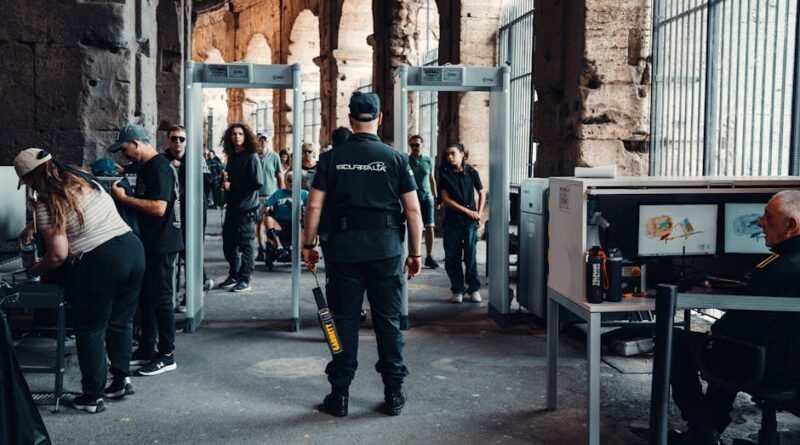
Security at the Colosseum is generally straightforward, but you should expect screening similar to other major attractions. Bags may be opened for inspection, and staff may ask to see the contents of certain items. You may also pass through a metal detector or similar checkpoint.
The process is usually faster when visitors arrive prepared. Keep metal items, liquids, and electronics organized so you are not searching through your bag at the last moment.
How early should you arrive?
Arriving early is one of the simplest ways to reduce stress. A good rule is to arrive with enough time to handle ticket checks, possible lines, and security screening without rushing. Timed-entry attractions work best when you are already nearby before your slot begins.
If you are visiting during a busy period, joining a tour, or traveling with children, extra buffer time helps. It also gives you space to solve small issues, such as finding the correct entrance or opening a digital ticket.
What slows the line down?
- Large or overstuffed bags
- Hard-to-access ID and tickets
- Sharp objects or restricted items found during inspection
- Groups arriving with different time slots
- Visitors needing to reorganize belongings at the checkpoint
Traveling light is not only more comfortable inside the site. It also helps you get through the entrance more efficiently.
What you can usually bring inside
Small bags and everyday essentials
In general, small backpacks, handbags, and compact personal items are the safest choice. Essentials such as your phone, wallet, ID, tickets, medication, and a few personal items are usually fine as long as they fit within normal security expectations.
Choose a bag that is easy to open for inspection. A simple day bag or small crossbody is usually much more practical than a large travel backpack.
Water, snacks, and personal items
Rules can vary in practice, so it is wise to keep food and drink minimal. A small bottle of water is often more practical than carrying multiple drinks or bulky picnic items. Large quantities of food or anything packed in glass is a poor idea.
If you need medication, keep it clearly stored and easy to explain if asked. Families with children should also pack only what they realistically need for the visit.
Phones, cameras, and basic travel gear
Phones and standard cameras are generally normal visitor items. The key is not to bring equipment that is bulky, difficult to inspect, or likely to raise questions at security. Keep accessories limited and organized.
If you are carrying power banks, cables, or small electronics, place them where they can be checked quickly. Loose gear at the bottom of a crowded bag can slow you down.
What you should not bring
Oversized bags and luggage
One of the most common mistakes is arriving with luggage, a large backpack, or a heavy travel bag. The Colosseum is not designed for visitors carrying bulky possessions, and storage options should not be assumed. If your bag looks too large, you may be refused entry.
This is especially important if you are visiting on arrival or departure day in Rome. Store your luggage elsewhere before heading to the site.
Sharp, dangerous, or restricted items
Anything that could be considered a security risk should stay out of your bag. That includes knives, scissors, tools, and similar objects. Even if you forgot they were packed, security may still stop you.
Glass containers and items that could be used dangerously are also best avoided. When in doubt, pack more conservatively.
Bulky extras you probably will not need
Even if an item is not strictly prohibited, it may still make entry harder. Large umbrellas, multiple shopping bags, oversized camera gear, and unnecessary accessories can slow you down and make the visit less comfortable.
A practical source on security checks in Rome notes that bulky personal possessions such as suitcases or heavy backpacks can lead to refusal at entry, and that there is no reason to expect on-site storage for large items. See this security check guide for Rome museums and the Colosseum for added context.
| Item | Best approach |
|---|---|
| Passport or photo ID | Bring it and keep it easy to access |
| Small handbag or day bag | Usually the safest option |
| Large backpack or suitcase | Avoid bringing it to the entrance |
| Sharp objects | Do not bring them |
| Glass bottles or containers | Best avoided |
| Phone and standard camera | Usually fine if easy to inspect |
How to pack for the smoothest possible entry
Use a simple entry-ready checklist
A little organization can make security much easier. Before leaving for the Colosseum, check that you have only the essentials and that important items are easy to reach.
- Ticket downloaded and visible on your phone
- Valid photo ID packed separately for quick access
- Small bag only
- Water and medication kept minimal and organized
- No sharp objects, glass, or bulky extras
Dress for comfort and practicality
There is no need to overthink your outfit, but practical clothing helps. Comfortable shoes, weather-appropriate layers, and secure pockets make the visit easier. Since you may stand in line and walk on uneven surfaces, comfort matters more than style.
If you are carrying a jacket, avoid stuffing lots of items into its pockets. Security checks are easier when your belongings are all in one manageable place.
Quick Tip: If you are visiting with children or in a group, assign one adult to hold all tickets and another to hold the IDs. That avoids confusion at the checkpoint.
Common mistakes that cause stress at the gate
Assuming a phone booking is enough on its own
A digital ticket is useful, but it does not replace identification. If the ticket is named, staff may still ask for ID. Have both ready.
Showing up with travel luggage
This catches many visitors by surprise, especially those coming straight from a hotel checkout or airport transfer. The safest plan is to deal with luggage first and visit the Colosseum afterward.
Not checking ticket details in advance
Name errors, wrong dates, and mismatched time slots can all create avoidable problems. Review your booking confirmation the day before your visit, not while standing in line.
Bringing too much for a short visit
The Colosseum is not a place where carrying more helps. A lighter bag means faster entry, easier movement, and less chance of trouble at security.
Frequently Asked Questions
Do I need my passport to enter the Colosseum?
A valid photo ID that matches the ticket name is the safest choice, and for many international visitors that means a passport. If you want to avoid uncertainty, bring it.
Can I bring a backpack into the Colosseum?
A small backpack or compact personal bag is usually the safest option. Large backpacks, suitcases, and bulky luggage can cause delays or lead to refusal at the entrance.
Are there bag checks at the Colosseum?
Yes, you should expect security screening and possible bag inspection. Keep your belongings organized so you can pass through the checkpoint more quickly.
What happens if my ticket name and ID do not match?
This can create entry problems and may lead to extra checks or denial of entry. Always review your booking details in advance and correct any errors as early as possible.