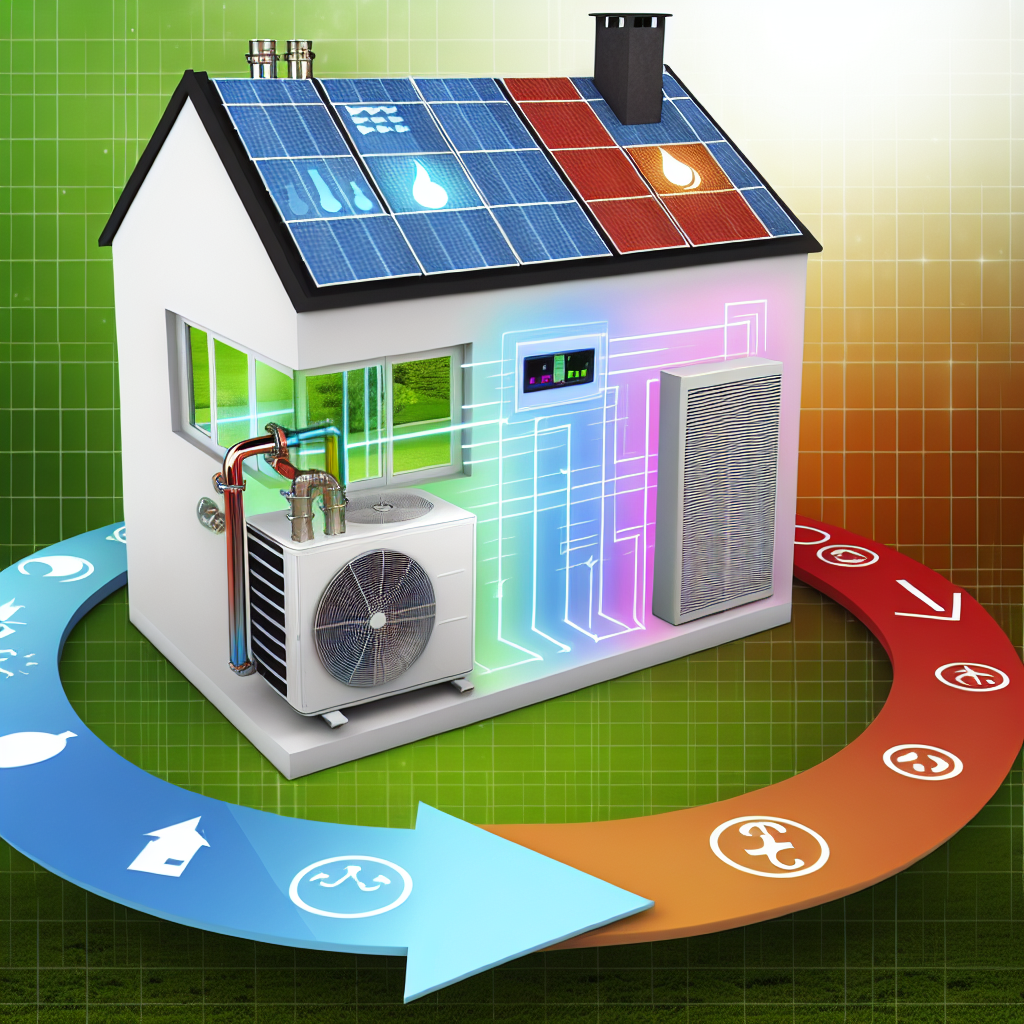
Panasonic makes a broad range of heating, cooling and air-conditioning products, including its Aquarea air-to-water heat pumps. For technicians and homeowners, the most useful way to compare them is to look beyond general promises about efficiency: examine the heat load, flow temperature, refrigerant, weather conditions, controls and availability of qualified local service. The exact features depend on the model and market.
What types of Panasonic heat pumps are available?
Air-to-water: Panasonic’s Aquarea family takes energy from outdoor air and delivers heat to a water-based space-heating circuit, and, with suitable configuration, domestic hot water. Many systems can also provide cooling when the emitters and installation permit it. Panasonic documents the product families and their current capabilities in its official HVAC product range.
Air-to-air: Panasonic also supplies air-conditioning systems that operate as heat pumps, moving energy between indoor air and outdoor air. These serve different installation needs from an air-to-water system; a wall-mounted room unit is not a direct replacement for a whole-house wet radiator circuit.
Ground-source: The earlier version of this article incorrectly grouped ground-source heat pumps as a standard Panasonic range without verifying a current Panasonic model. Ground-source technology does exist, but you should not assume a brand offers it in your market. For a ground-source overview see the Kensa explanation, then confirm local products independently.
How inverter control contributes to performance
Inverter-driven compressors can vary output to better match heating or cooling demand than a simple on/off system. That can reduce repeated cycling under appropriate conditions. But an inverter is only one part of efficiency: sizing, insulation, water temperature, airflow, controls and installation quality strongly influence actual results. The previous article presented generic single-phase and three-phase industrial inverter specifications as though they characterised Panasonic heat pumps; those details were neither model-specific nor a dependable buyer’s guide.
What technicians should check before recommending a unit
- Heating design load: estimate the property’s heat loss and do not size solely from existing boiler output.
- Distribution system: verify radiator, underfloor or fan-coil suitability at the intended water temperature.
- Climate and capacity: use the relevant manufacturer’s capacity data at realistic outdoor temperatures, including low-temperature performance.
- Hot water: confirm cylinder size, recovery expectations and system integration rather than assuming every model supplies hot water in the same way.
- Electrical and refrigerant safety: check power supply, protection requirements, siting, piping and installer qualifications for the chosen refrigerant and model.
- Noise and service: review official sound figures under their test conditions, placement constraints, parts and warranty terms.
What about refrigerants and environmental impact?
Different generations of Aquarea equipment use different refrigerants. Panasonic has discussed products using R290 (propane) in official announcements, but you must check the actual model label and technical documentation before describing a particular system as lower-impact. R290 equipment requires adherence to the manufacturer’s siting and safety instructions; do not assume a general installation procedure applies unchanged.
Efficiency depends on the building and the system
Seasonal performance figures under standard test conditions help compare products, but they cannot promise a specific household bill reduction. High radiator flow temperatures, poor insulation or unsuitable controls may reduce efficiency. This is why a heat-pump installation quote should document a heat-loss calculation and a system design, not only a headline efficiency number. Our heat pumps 101 guide explains the underlying technology, while our energy-cost overview explains what influences running costs.
Always use the latest installation manual and product data for the exact Panasonic unit supplied in your country, and use qualified professionals for design, electrical work and refrigerant-related work. Sources reviewed November 2026: Panasonic global HVAC catalogue and its Aquarea R290 announcement. Product availability, subsidies and warranties change by country.